
How AI Shapes E-commerce Today
AI is changing the way people shop online and how businesses run their stores. Every time I browse a product recommendation or use a chatbot for help, I’m seeing AI in action. Retailers use AI to manage stock levels, suggest items I might like, spot fake reviews, and even prevent fraud. It’s wild how AI tools help ecommerce shops tweak their ads or promotions based on what’s trending and what I’m likely to click. All this tech isn’t just for the big players; smaller stores are finding ways to make AI a pretty handy part of their setup, too. From powering smarter search results to helping businesses quickly answer customer questions, new AI tools are being put to work on everything from order tracking to inventory restocking. AI also helps companies respond faster to changes in the market by making it easy to test new offers and spot shifting consumer interests. These improvements are shaping online shopping, making it both more efficient and more personal for everyone involved.
Busting the Top AI Myths in E-commerce
Myth: AI Is a Magic Wand
Some folks believe AI can solve anything instantly. It can’t. AI needs input, goals, and time to learn. Setting up an AI tool for predicting customer favorites or streamlining order fulfillment works best when I see it as a project, not a quick fix. The real boost comes from realistic expectations and steady fine-tuning. Regularly checking in on how the AI is doing and making small adjustments is key to getting long-term value.
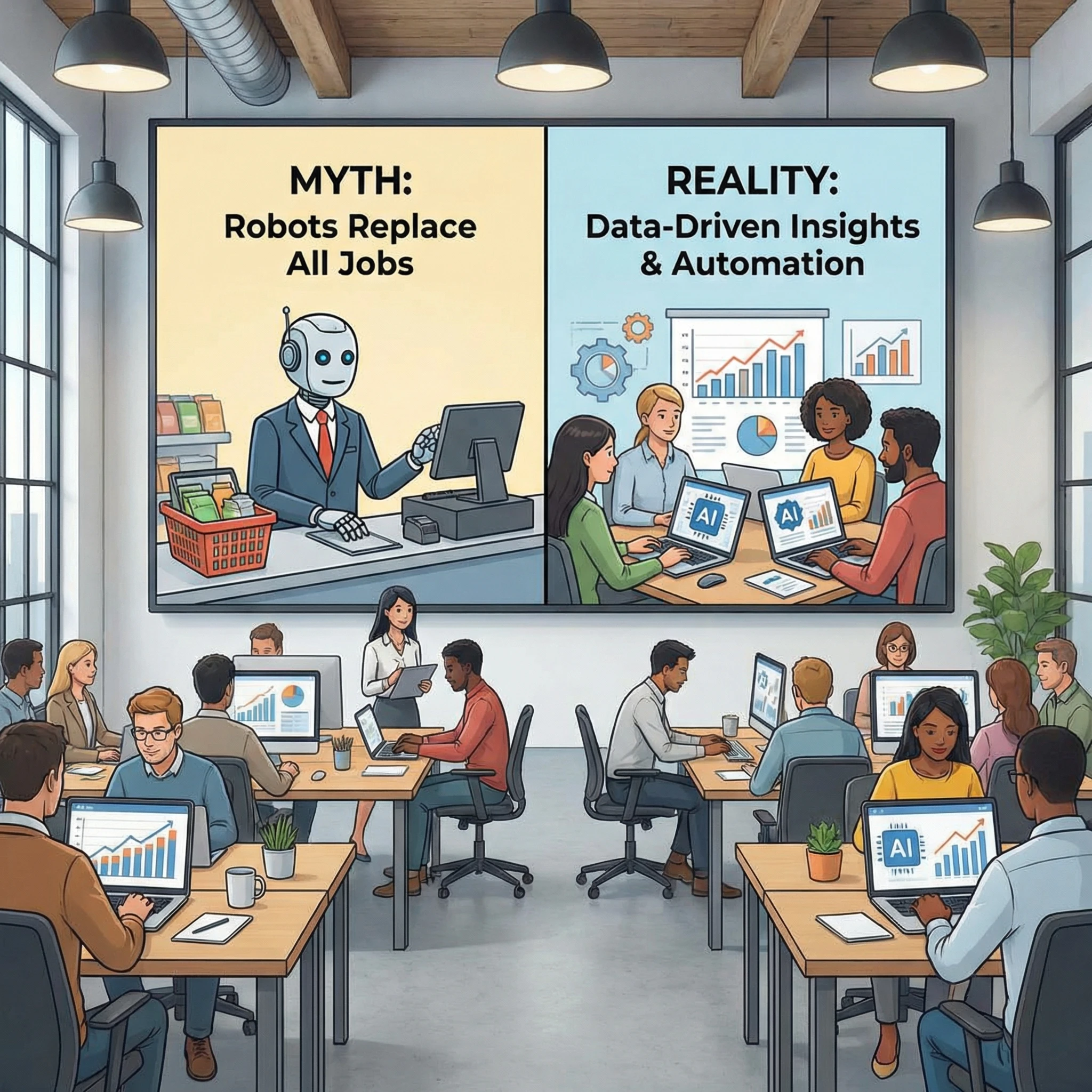
Myth: AI Replaces Human Jobs
While AI automates some tasks, this doesn’t mean the end for people working in ecommerce. Instead, it takes over routine stuff like sorting emails or suggesting upsells, which frees up staff to focus on things AI can’t do, like one-on-one customer service or creative strategy. For only-AI businesses, customer trust takes a hit; most successful stores still count on a real team behind the scenes. In fact, AI can give workers a boost by letting them spend more energy on meaningful tasks rather than repetitive chores.
Myth: AI Is Only for Big Budgets
I used to think only giant companies could afford AI. But more tools are designed for small and midsize shops. There are many plugandplay services with free trials or flexible pricing. It’s worth checking out what fits your shop rather than assuming AI is too pricey or out of reach. The growing selection of affordable apps means even a small business can start using AI to manage inventory, recommend products, or respond to customers faster.
Myth: You Need Perfect Data to Start
Data powers AI, but nobody’s data is perfect right from the start. I’ve learned that smart AI tools work with what I already have and get better as they go. The key is being patient and not waiting for a flawless spreadsheet before trying something new. Starting with the basics and letting the system improve with experience can be much more effective than holding off until everything is “just right.”
Myth: AI Makes Interactions Impersonal
Some shoppers worry that AI means cold, robotic customer service. In reality, AI can personalize interactions better than I could manage alone, like remembering what I bought before or sending just the right promo at the right time. Keeping the human touch in balance with smart automation usually leads to happier shoppers. Personal recommendations and timely support messages actually make customers feel recognized and valued.
Myth: AI Is Too Complex or Hard to Use
This one crops up a lot. The truth is, AI tools are getting easier to set up and use, even if you’re not a tech whiz. Many platforms offer simple dashboards, visual walkthroughs, and support. It helps to start small and build confidence as you go. You don’t have to understand all the technical details—just picking a simple tool and experimenting can show immediate results.
What Are the 5 Biggest AI Fails?
I’ve seen some memorable messups: recommending strange products, sending customers to broken links, delivering creepy personalization, misinterpreting slang, and hitting shoppers with too many annoying popups. Fixing these usually comes down to regular testing and getting real feedback from shoppers. Continual updates and surveys are often needed to quickly pick up on what’s working and what isn’t.
Biggest Criticism and Real Limitations of AI in E-commerce
One honest criticism is how easy it is to overtrust AI. Sometimes the data AI learns from is biased or incomplete, which leads to odd results. None of these tools are perfect, and AI can sometimes ignore special context only a person would notice. There are privacy and transparency issues, plus times when AI tips over into being confusing or just plain wrong. Relying on AI too much without keeping a human eye on things can be a problem. Responsible use means testing ideas, checking for bias, and making sure humans are always part of the loop to keep shoppers satisfied.
Key Takeaways
AI is already making ecommerce smarter and easier to manage, but it’s far from magic. Jumping in doesn’t require a huge wallet or a data science degree, just some curiosity and a willingness to experiment. AI works best as a helper, not a full replacement for real humans. Starting small, learning from wins and mistakes, and never forgetting that shoppers are people with real needs can help any online shop get more out of today’s AI tools. Stay aware, seek feedback, and let AI give a boost to your store without losing your brand’s personal touch. The bottom line: with a careful approach, AI can make online shopping smoother for sellers and buyers alike.